Cape Town's attractions are spread across a peninsula 60 kilometres long. How you move around decides both the trip and the budget, and for one person the answer is different from a couple's.
The transport arithmetic
Within the city and the Atlantic seaboard — ride-hailing is cheap and widely used, and it is the standard way to get around.
For the peninsula and the winelands — a car or an organised day tour.
Day tours price per person, which suits solo travellers better than hiring a car whose cost does not split. This is the opposite of the usual advice, and for one person it is correct.
Many visitors rent for two or three days rather than the whole trip, and use tours for the rest.
Table Mountain
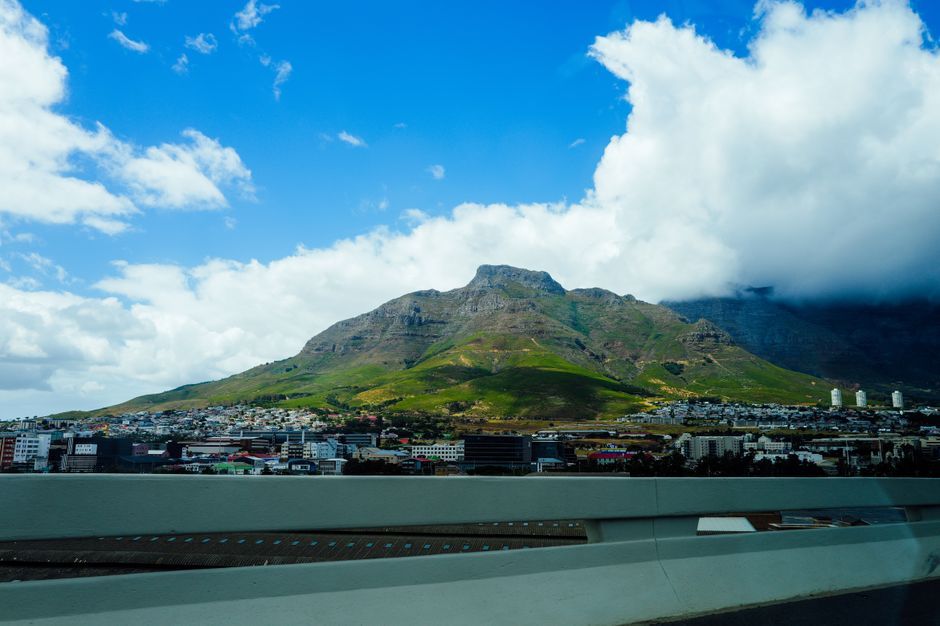
Go on the first clear, still morning of your trip. Not later.
The cable car closes in high wind, which happens frequently, and cloud covers the plateau regularly. People save it for the last day and never get up.
Platteklip Gorge is the walk up — steep, two to three hours, no shade, no technical difficulty. It is the alternative when the car is shut.
Lion's Head at sunrise or full moon is shorter, has chains near the top, and gives the best view of the city.
The day tours worth taking
The Cape Peninsula — Chapman's Peak Drive cut into the cliff, Cape Point, the Boulders Beach penguin colony, and back through Simon's Town. A full day, priced per person.
The winelands — Stellenbosch and Franschhoek. Take a tour rather than driving, since tasting and driving do not combine and limits are enforced. The Franschhoek wine tram is the hop-on hop-off alternative.
Robben Island — book days or weeks ahead, ferry places are limited and crossings cancel in rough weather. Led partly by former political prisoners, which is what makes it.
In the city, on foot
Bo-Kaap, the painted Cape Malay quarter — residential, so photograph considerately.
The V&A Waterfront, and the Zeitz MOCAA museum in a converted grain silo.
Kirstenbosch botanical gardens on the mountain's eastern slope, with a canopy walkway.
Company's Garden and the museums around it.
Safety, practically
Tourist areas are heavily policed and generally fine in daylight.
Do not walk between neighbourhoods at night. Use ride-hailing after dark, which is cheap.
Take local advice on which areas are fine on foot — your accommodation will tell you plainly.
Do not walk alone on quiet trails on the mountain; go with others or on a busy path.
The realistic risk is opportunistic theft rather than anything else.
Meeting people
Hostels in the city bowl and Green Point, several with organised activities.
Day tours, which are naturally social over a full day.
Free walking tours in the centre.
Surf and kitesurf lessons at Muizenberg and Blouberg.
Practical
Season: November to March is summer — warm, dry and windy, with a southeaster that can be relentless. Whales are in Hermanus roughly June to November.
Load-shedding — scheduled power cuts — has affected South Africa for years. Check whether accommodation has a generator.
Book Robben Island and Table Mountain as far ahead as you can.